Other links or resources
Read related stories
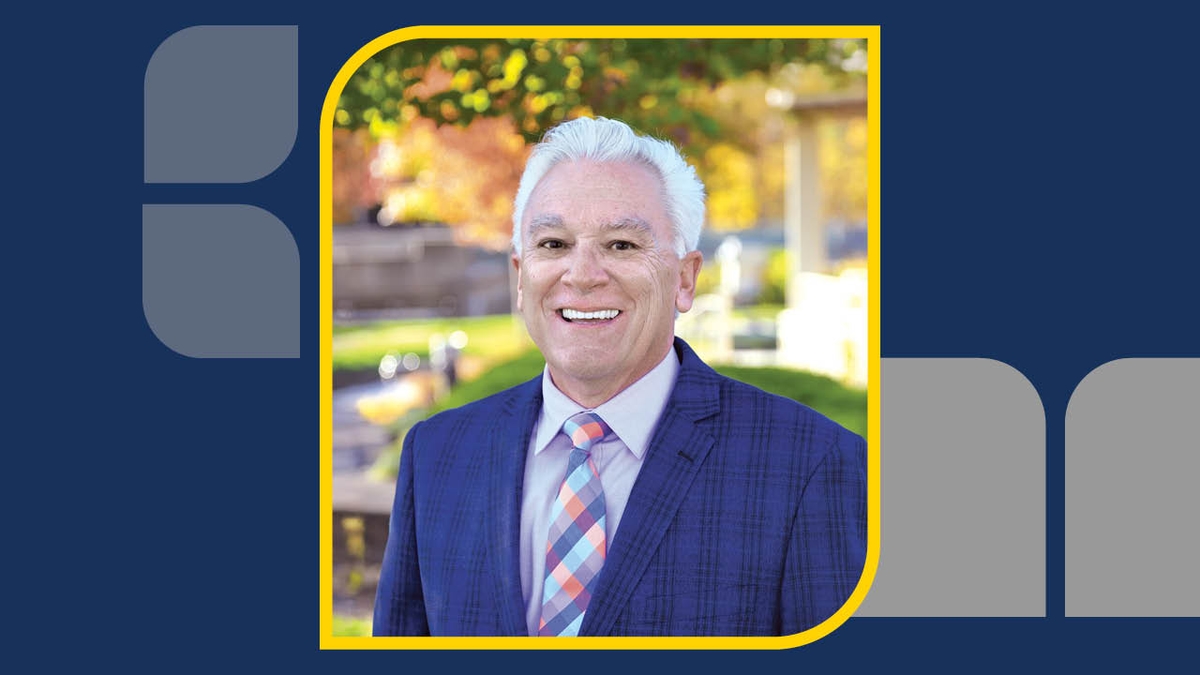 Patient Story
Lifesaving Care for Internal Bleeding: Lawrence's Story
Timely, transfusion-free care saved Lawrence Morgan from a life-threatening internal bleed.
Five days after undergoing a colonoscopy at a nearby clinic, 71-year-old Lawrence Morgan was at work at a hydraulic lift company he oversees as CEO. He began bleeding from his colon, a complication of having seven polyps (potentially precancerous growths) removed.
“I felt faint, but I managed to clean myself up and went to my office to lie down,” says Lawrence, who was 67 at the time. “I was fading fast.”
Lawrence’s daughter, Lauren, was on site, so he told her to take him to Englewood Hospital as quickly as possible.
“I’ve referred many people to Englewood Hospital over the years,” says Lawrence, who is one of Jehovah’s Witnesses and won’t accept blood transfusions for religious reasons. “Englewood Hospital has bloodless resources that other hospitals simply don’t have. It’s the gold standard for people like me who don’t want blood transfusions as part of their health care. They have a state-of-the-art bloodless program, so that’s exactly where I wanted to go.”
Accelerated Care
After being admitted to Englewood Hospital, Lawrence was placed under the care of the on-call gastroenterologist, Eugene Han, MD.
Dr. Han determined Lawrence needed another colonoscopy to find the source of the bleeding. Typically, patients need a full day before a colonoscopy for the preparation, but Lawrence couldn’t afford to wait that long.
“Since Lawrence’s vital signs weren’t stable when he arrived in the Emergency Department and blood transfusions were not an option, it was imperative to do the colonoscopy as soon as possible,” Dr. Han says. “We gave him a rapid prep in which he drank the solution in just a few hours. I performed the colonoscopy about six hours after he arrived at the hospital.”
No Need for Transfusion
The colonoscopy revealed serious but treatable bleeding.
“We found two bleeding sites where the doctor had removed polyps days earlier,” Dr. Han says. “We treated them using a combination of metal clips, cauterization [burning the tissue], and an epinephrine injection, which causes blood vessels to constrict.”
Lawrence went home after three days in the hospital. He took a few weeks off from work to rest and allow his hemoglobin count, which had dropped below normal, to rebound.
“I’m happy to say that I’ve fully recovered, and my hemoglobin is back to a normal level,” Lawrence says. “Englewood Hospital saved my life.”
Published February 2026