Specialized, team-based care to prevent amputations caused by serious foot and leg conditions
Englewood Hospital’s Limb Salvage Program brings together experts in vascular surgery, podiatry, and wound care through an innovative, multidisciplinary approach. We work together to help patients at risk for amputations heal, preserve mobility, and avoid amputation whenever possible.
Why Choose Englewood Hospital for Limb Salvage?
Limb-threatening conditions are often complex and may involve more than one underlying issue at the same time. A wound may not heal because of poor circulation, infection, pressure, nerve damage, diabetes, or a combination of factors. Englewood Hospital’s Limb Salvage Program is designed to bring the right specialists together to address all of these issues in a coordinated way.
Our team evaluates each patient comprehensively and creates an individualized treatment plan focused on healing, relieving pain, preserving function, and helping prevent the need for limb amputation. If amputation becomes necessary after all other options have been considered, we work closely with our prosthetics colleagues to ensure optimal functionality and quality of life.
Conditions We Treat
The Limb Salvage Program cares for patients with a wide range of serious foot and leg conditions, including:
- Peripheral artery disease (PAD)
- Critical limb-threatening ischemia (CLTI)
- Chronic venous insufficiency
- Diabetic foot ulcers
- Nonhealing foot or leg wounds
- Foot infections
- Gangrene
- Pressure injuries
- Wounds caused by poor circulation
Blood flow is the foundation of healing. In many patients with serious foot or leg wounds, underlying vascular disease is a major part of the problem. By identifying and treating those circulation issues, we can help create the conditions the body needs to heal.
-
Thomas Bernik, MD, Chief of Vascular Surgery

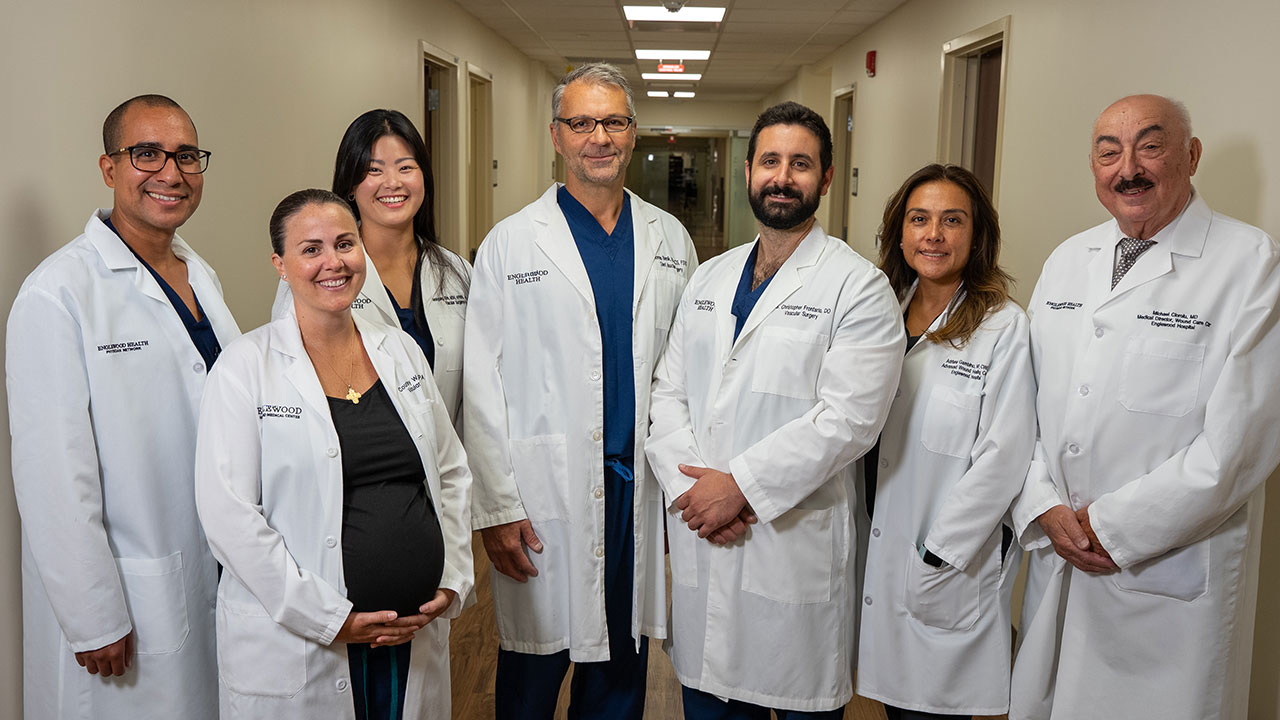
Vascular and wound care teams at Englewood Health
Our Team
Patients benefit from a multidisciplinary team approach that may include:
- Vascular surgeons: Evaluate circulation and perform procedures to improve blood flow to the legs and feet
- Wound care specialists: Manage complex wounds and help promote healing
- Podiatrists: Address foot structure, pressure points, diabetic foot conditions, and other issues that can affect healing and mobility
Our Approach to Care
Treatment at the Limb Salvage Program is focused on identifying and addressing the source of the problem while supporting healing and preserving function.
Restoring blood flow
When poor circulation is preventing a wound from healing or causing pain in the foot or leg, vascular specialists evaluate whether minimally invasive procedures or surgery may help improve blood flow.
Supporting wound healing
Patients with nonhealing wounds receive advanced wound care tailored to the type, size, and severity of the wound. This may include debridement, specialized dressings, infection management, hyperbaric oxygen therapy and strategies to protect the area as it heals.
Wound healing is about more than treating the surface. It requires understanding why a wound is not healing and creating a plan that supports recovery at every stage. Our goal is to help patients heal as fully as possible while protecting function and mobility.
-
Michael Cioroiu, MD, CWS, Medical Director of Wound Care

Protecting the foot and leg
Podiatric care plays an important role in reducing pressure, addressing structural issues, and helping prevent wounds from worsening or returning, especially in patients with diabetes or neuropathy.
Signs You Should Be Evaluated
You may benefit from a limb salvage evaluation if you have:
- A foot or leg wound that is not healing
- A diabetic ulcer
- Pain in the foot or leg at rest
- Swelling, drainage, or signs of infection
- Skin discoloration in the toes or feet
- Coldness in one foot or leg
- Black tissue or gangrene
- A wound that keeps returning
To make an appointment, call: 201-894-3689.