Image
 Englewood Health News
March 12, 2026 — Englewood Hospital has expanded its neurosciences program with the acquisition of a state-of-the-art biplane imaging system, the appointment of new clinical leadership, and the expansion of a multidisciplinary stroke team with new specialists across neurology, neurosurgery, and endovascular care.
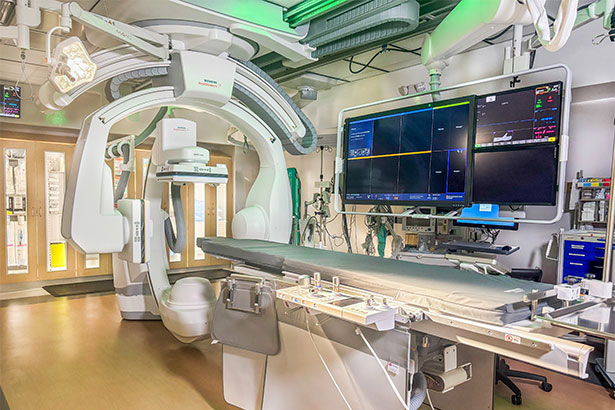
The latest-generation Siemens biplane system delivers an extraordinary level of real-time visibility inside the brain’s blood vessels, enabling intervention in complex stroke and neurovascular cases that previously could not be treated.
This advanced technology significantly expands Englewood Hospital’s ability to provide sophisticated stroke and neurointerventional care, bringing a new level of world-class intervention to patients in the community. This investment also builds on Englewood Hospital’s longstanding excellence in neurosurgery, strengthening the hospital’s ability to deliver comprehensive care for complex brain and vascular conditions.
“In just the first couple of weeks using this technology, we’ve already seen the difference it can make for patients with the most severe strokes,” said Joseph Carnevale, MD, director of endovascular stroke at Englewood Hospital. “The level of clarity it gives us when navigating the brain’s blood vessels allows us to move faster and treat with incredible precision when every second counts.”
“Stroke care depends on speed, coordination, and expertise,” said Justin Marcus, MD, medical director of stroke at Englewood Hospital. “By bringing together advanced technology and a highly coordinated clinical team, we’re able to respond quickly and deliver the level of care these patients urgently need.”
The biplane system uses two X-ray cameras positioned at different angles to capture simultaneous, high-resolution images of blood vessels in the brain. This dual-plane technology allows physicians to visualize complex vascular structures in real time, enhancing both speed and precision during minimally invasive procedures.
For patients experiencing ischemic stroke — where brain tissue is lost every second blood flow is blocked — the system supports faster, more efficient mechanical thrombectomy procedures to remove clots and restore circulation. By improving visualization and reducing procedure time, the technology strengthens the hospital’s ability to deliver rapid, potentially lifesaving intervention. In just two weeks, Englewood Hospital has already seen lifechanging outcomes for patients presenting with the most severe stroke symptoms.
Beyond stroke treatment, the system enhances Englewood Hospital’s capacity to treat brain aneurysms, arteriovenous malformations (AVMs), carotid artery disease, and other complex brain and vascular conditions.
Englewood Health has appointed two physician leaders to guide and further advance its rapidly evolving stroke program.
Dr. Marcus has been appointed medical director of stroke. A neurologist with primary clinical interests in inpatient neurology, acute stroke care, and epilepsy, he earned his MD at the University of Miami School of Medicine and completed his neurology residency at NewYork Presbyterian Weill Cornell Medical Center and Memorial Sloan Kettering Cancer Center, followed by a clinical neurophysiology fellowship with an emphasis in epilepsy at Yale New Haven Hospital. He is board certified in neurology, clinical neurophysiology, and epilepsy by the American Board of Psychiatry and Neurology. His extensive academic training and experience across leading medical centers position him as a key leader in advancing stroke care at Englewood Health.

Dr. Carnevale has been appointed director of endovascular stroke. A neurosurgeon specializing in minimally invasive, catheter-based treatment of complex cerebrovascular conditions, he earned his MD at Brown University Medical School and completed his residency in neurological surgery at NewYork Presbyterian Weill Cornell Medical Center and Memorial Sloan Kettering Cancer Center, followed by an endovascular neurosurgery fellowship at New York Presbyterian. His combined expertise in open and minimally invasive cerebrovascular techniques enables him to deliver highly specialized, modern stroke intervention tailored to each patient.
“The combination of advanced technology and expert leadership meaningfully elevates the level of stroke care we can provide,” said Hillary Cohen, MD, chief medical officer at Englewood Health. “When minutes matter most, our community deserves immediate access to sophisticated intervention close to home. This investment ensures we are prepared to meet that responsibility at the highest level.”