Other links or resources
Read related stories
 Consumer Health
Thinking of Getting Pregnant? Don't Miss This One Appointment
If you're hoping to see a positive pregnancy test soon (or even someday), there's one simple step that can make your entire pregnancy journey a lot smoother: a pre-conception consultation.
It's different from your annual exam. It's focused entirely on preparing your body, your health, and your mind for pregnancy.
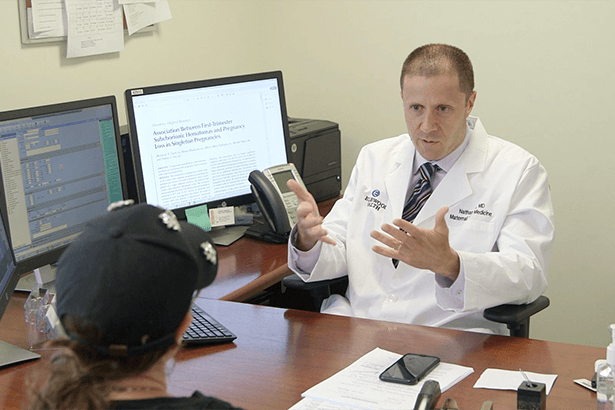
"A pre-conception visit helps you walk into pregnancy prepared instead of playing catch-up," says Nathan Fox, MD, maternal-fetal medicine specialist at Englewood Health and host of the Healthful Woman podcast. "It's an opportunity to address risks factors early, reduce stress, and make sure you're starting from the strongest place possible."
Here's why that matters:
Genetic Carrier Screening
Most people are carriers for at least one inherited genetic condition — and have no idea. Carrier screening is a simple blood or saliva test that looks for conditions that could be passed on to a child.
If both partners carry the gene for the same condition, there is a 25% chance with each pregnancy that the baby could be affected.
"That information can feel overwhelming," says Dr. Fox. "But when you learn it before pregnancy, you have time. You have space to think. And you have options."
Those options may include proceeding naturally with early monitoring, pursuing IVF with preimplantation genetic testing, or meeting with a genetic counselor to understand the risks more clearly.
The power of pre-conception screening isn't about creating fear. It’s about creating clarity — so decisions are thoughtful and proactive, not rushed during pregnancy.
Check Your Immunity
Some vaccines — including measles, mumps, rubella (MMR) and chickenpox — are not typically given during pregnancy. A simple blood test before conception can confirm whether you're immune.
"If someone gets one of these infections during pregnancy, it can be dangerous," Dr. Fox explains. "Knowing your immunity ahead of time allows you to get vaccinated before you conceive."
It’s a small step that can prevent major stress later.
That Penicillin Allergy Might Not Be Real
Many adults report a penicillin allergy based on a childhood reaction that was never formally tested.
Why does this matter? Penicillin-related antibiotics are among the most used and well-studied medications in pregnancy.
"A lot of people go their whole lives thinking they're allergic to something and later learn they aren't," Dr. Fox says. "That can make a big difference if you ever need antibiotics while pregnant."
Allergy testing is most reliable when done before pregnancy, making this a useful topic to address early.
Catch Up on Routine Care
Pregnancy makes everyday health tasks feel more complicated. A pre-conception visit is a chance to get up to date on:
- Pap smears
- Mammograms (especially if you’re 40 or approaching 40)
- Blood pressure and diabetes screening
- Thyroid testing
- Dental cleanings and needed dental work
It's also important to remember that some tests and procedures — such as colonoscopy and certain imaging studies — typically cannot be performed during pregnancy. Addressing recommended screenings beforehand can help avoid delays in care.
"If you can take care of these things beforehand, it's one less thing to manage once you're pregnant and potentially dealing with nausea and fatigue," Dr. Fox says.
Review Medications — Don't Stop Anything Suddenly
If you take medication for high blood pressure, thyroid disease, seizures, autoimmune conditions, depression, anxiety, or other chronic issues, this conversation is essential.
Some medications are safe in pregnancy. Some need adjusting. But stopping abruptly can be dangerous.
"Most of the time, we can make a safe plan without delaying pregnancy," Dr. Fox says. "It's about optimizing your health, not creating obstacles."
Determine Your Vitamin Regimen
Before conception, timing matters. Folic acid helps prevent neural tube defects, which develop in the earliest weeks of pregnancy — often before someone knows they're pregnant.
"That's why we don't want to wait until after a positive pregnancy test," Dr. Fox says. "The key nutrient to have on board before you get pregnant is folic acid."
Most experts recommend at least 400 micrograms of folic acid daily. A pre-conception visit can help confirm the right dose and create a plan that works for you — especially if large prenatal vitamins tend to make you nauseous.
Make a Plan to Stop Drinking and Smoking
Just as timing matters for vitamins, it also matters for alcohol and smoking. If you're trying to conceive, it's important to think ahead.
"For some women, stopping alcohol or nicotine feels straightforward. For others, it's more complicated — and that's okay," says Dr. Fox. "The important thing is to have a plan and support in place before pregnancy."
A pre-conception visit is an opportunity to talk openly about alcohol or tobacco use and create a realistic strategy that works for you. At Englewood Health, addiction medicine specialists offer outpatient and virtual visits to help patients reduce or stop alcohol and nicotine use in a confidential, supportive setting.
The goal isn't perfection — it's preparation and support.
Get Stronger Before You Conceive
You don't need a dramatic fitness overhaul to benefit. Even consistent brisk walking and light strength training can improve stamina and reduce the risk of complications such as gestational diabetes and preeclampsia.
"Pregnancy is hard," Dr. Fox says. "People who enter pregnancy already in some kind of routine tend to fare better. It can change the entire experience."
Peace of Mind Before the Positive Test
Pregnancy is exciting, but it can also feel overwhelming. Having a clear plan before you conceive can bring much-needed confidence into a life-changing moment.
Englewood Health offers dedicated pre-conception counseling visits with their maternal-fetal medicine specialists, designed to help you plan ahead.
If pregnancy is even remotely on your radar, this is one appointment worth making.
Learn more, including how to book an appointment, at the Maternal-Fetal Medicine Center
Posted on March 11, 2026